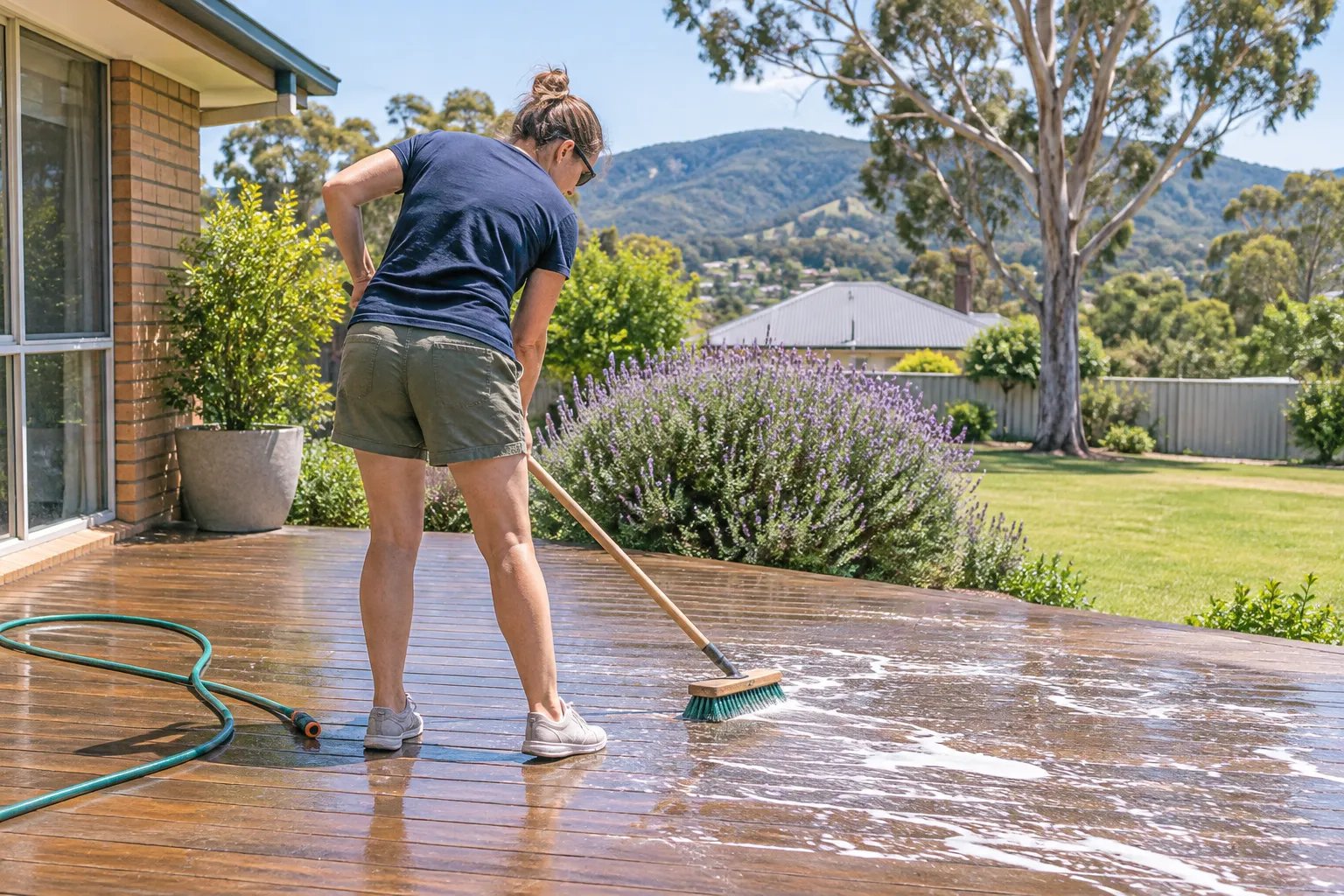
To clean a deck before oiling, clear and sweep it, wet the boards, scrub them along the grain with a timber deck cleaner and a stiff brush, then rinse thoroughly. For grey, weathered timber, use a timber reviver to lift the grey layer. For mould, use a deck cleaner or mould treatment made for timber. Sand any rough or peeling areas, then let the deck dry for two or three fine days before oiling. For the oiling itself, see our main deck oiling, staining and restoration page.
Why does a deck need cleaning before oiling?
Dirt, grime, mould and old weathered fibres sit on the surface and stop oil soaking into the timber. Oiling over them traps the dirt, gives a patchy finish, and the oil wears off quickly. A clean, dry surface lets the oil penetrate evenly, so it looks better and lasts longer. Preparation decides most of the result.
Deck cleaner or timber reviver: which do you need?
A deck cleaner removes everyday dirt, grime and light mould, and suits a deck that's been oiled in the last year or two. A timber reviver, usually oxalic acid based, lifts the grey, weathered layer and brightens old timber, and suits decks that have gone grey. Some products do both. Use the one that matches your deck's condition.
| Deck condition | What to use |
|---|---|
| Oiled recently, just dirty | Deck cleaner |
| Grey and weathered | Timber reviver |
| Mouldy, shaded areas | Mould treatment or deck cleaner |
| Old flaking stain | Sanding or a stripper |
| Tannin or black screw marks | Oxalic-based cleaner |
How do you clean a deck step by step?
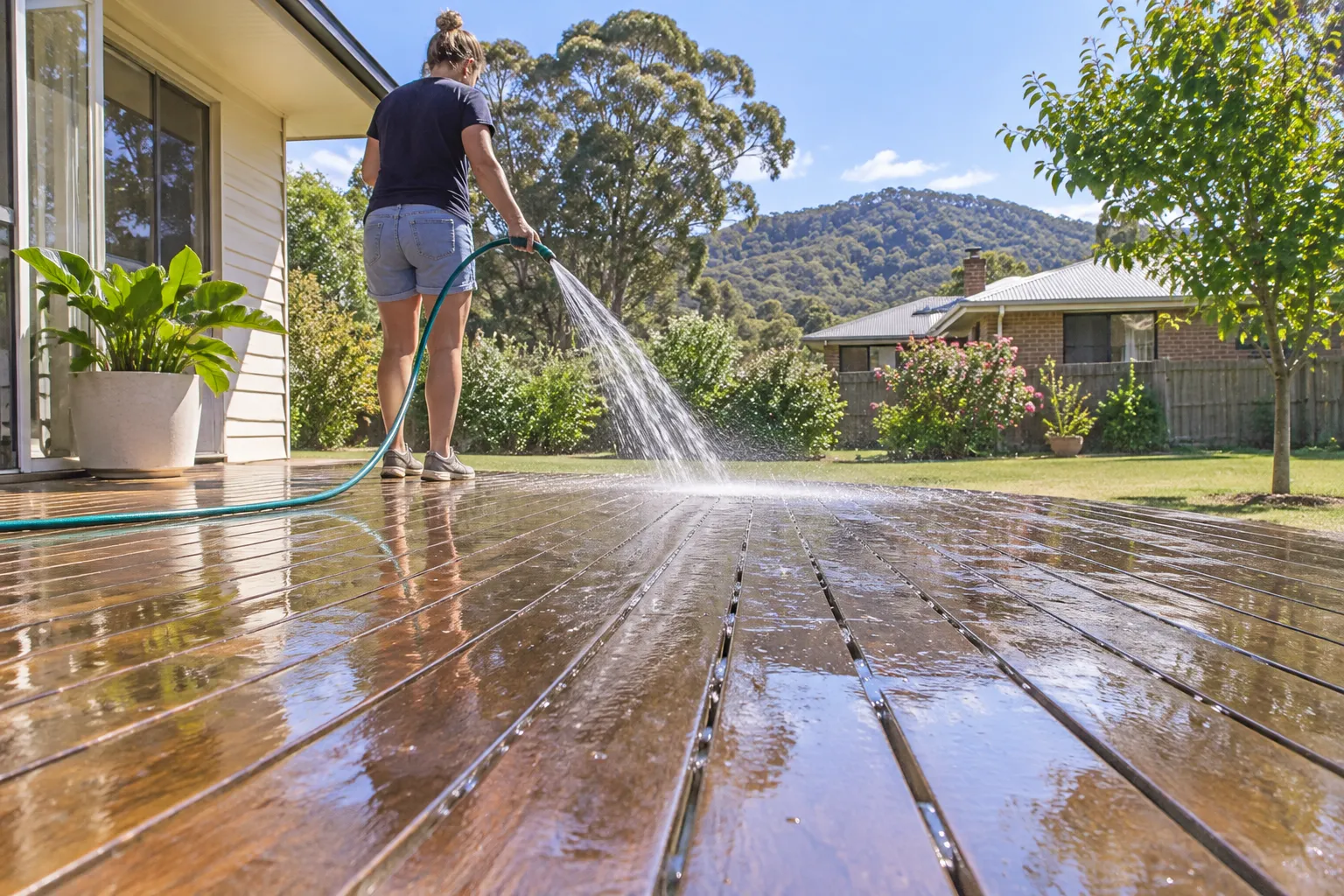
Clear everything off, sweep the deck and clear the gaps. Wet the boards, apply the cleaner or reviver as the label says, and scrub along the grain with a stiff brush. Leave it for the time on the label, but don't let it dry on. Rinse thoroughly with plenty of water, including the gaps. Then let the deck dry fully.
The steps:
- Clear and sweep, including between the boards.
- Wet the timber so the cleaner spreads evenly.
- Apply and scrub along the grain.
- Wait as directed, keeping it wet.
- Rinse well, gaps and all.
- Dry for two or three fine days.
Can you pressure wash a deck before oiling?
You can, but carefully. Too much pressure, or holding the nozzle too close, tears up the soft fibres between the grain, leaves the surface rough and furry, and can cause splinters. If you use a pressure washer, keep it on a low setting with a wide fan nozzle, hold it well back and move along the boards. A scrub brush and hose is gentler and usually enough.
If the surface ends up furry, a light sand before oiling smooths it again.
When do you need to sand before oiling?
Sand when the boards are rough, splintering or furry, when old film-forming stain is peeling, or when the deck is deeply grey and a reviver hasn't brought it back. A light sand by hand or with an orbital sander is enough for patches. For a whole deck, a floor sander saves time. Sweep and vacuum all the dust out afterwards.
How long should a deck dry before oiling?
Usually two or three fine, breezy days after washing. The timber needs to be dry right through, not just on the surface. Oiling damp timber is one of the main causes of sticky, patchy decks. Avoid oiling the morning after rain, heavy dew or frost. In Albury's winter, allow longer. A water-drop test helps: water should soak in quickly on dry timber.
See why is my deck sticky after oiling and how to oil a deck.
How do you clean a new deck before its first oil?
New hardwood decks, especially merbau, usually weather for about 6 to 12 weeks before the first oil, so tannin can leach out. Rinse the deck often during that time. Before oiling, clean it with a deck cleaner or a new-timber preparation product to remove mill glaze, dirt and remaining tannin, rinse, and let it dry. See how to clean merbau decking.
Questions people ask
What is the best way to clean a deck before oiling?
Scrubbing with a timber deck cleaner and a stiff brush along the grain, then rinsing thoroughly, is the most reliable method. Use a timber reviver instead for grey, weathered boards. Let the deck dry for two or three fine days before oiling. A gentle approach protects the surface better than high-pressure blasting.
Can you use sugar soap on a deck?
Sugar soap is made for indoor painted surfaces, and isn't designed for exterior timber decks. A cleaner made for timber decks is a better choice, because it's formulated for outdoor grime, mould and grey timber, and rinses cleanly. Whatever you use, rinse thoroughly so no residue is left before oiling.
Do you need to clean a deck every time you oil it?
Yes, at least a wash. Even a deck oiled recently collects dirt, pollen and grime that stop new oil soaking in evenly. On a well-kept deck, a quick clean with a deck cleaner and a rinse is enough. Older or grey decks need a reviver or sanding. Always let it dry fully afterwards.
How do you clean mould off a deck before oiling?
Scrub mouldy areas with a deck cleaner or mould treatment made for timber, leave it the time on the label, scrub again and rinse well. Let the deck dry completely before oiling. Improve airflow and trim back plants to stop it returning, because mould grows where decks stay shaded and damp.
The rest of our guides start from deck builder albury.
Where these facts come from
- Cabot's Natural Decking Oil, product data sheet
Updated