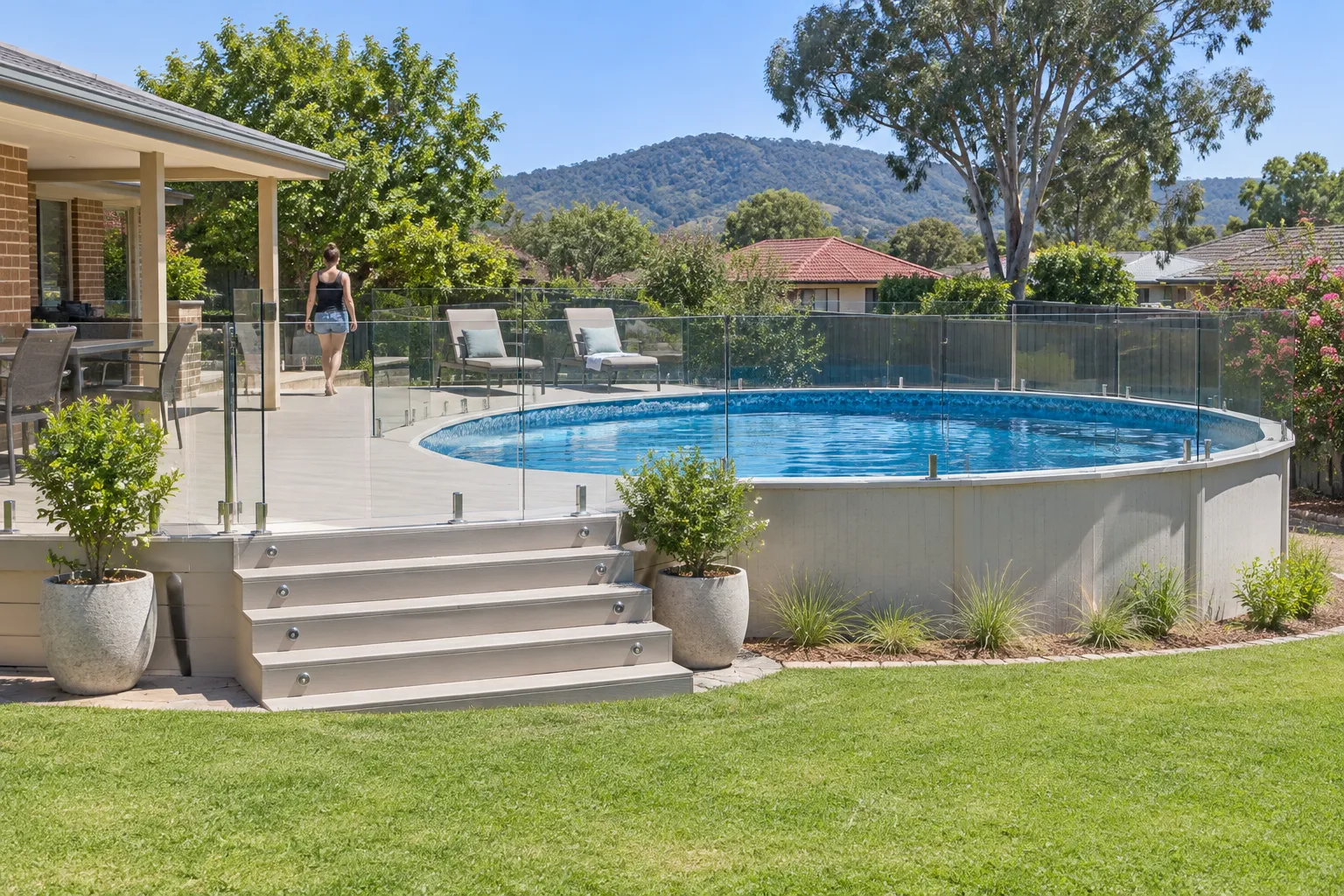
Timber pool decking works well when you choose a dense, pale hardwood, keep it oiled and keep it clean. Spotted gum and blackbutt are popular around pools in Albury because they're hard-wearing, stay cooler underfoot than dark boards, and resist splintering when looked after. Merbau can stain pool surrounds with tannin when new, and treated pine needs frequent oiling near water. For all pool deck materials and the pool fence rules, see our main pool decks page.
Which timber is best for a pool deck?
Dense, pale Australian hardwoods like spotted gum and blackbutt are usually the best timbers for pool decks. They're hard, durable above ground and stay cooler in sun than dark timbers. Spotted gum is rated class 1 above ground by Business Queensland. Merbau is durable but dark and tannin-rich. Treated pine is the budget option but softer and splinters more as it ages.
| Timber | Around a pool | Watch out for |
|---|---|---|
| Spotted gum | Hard, durable, cooler in pale boards | Colour variation, needs oiling |
| Blackbutt | Pale, hard | Needs oiling |
| Merbau | Durable, rich colour | Tannin stains, hotter when dark |
| Treated pine | Affordable | Splinters, frequent oiling |
How do you stop a timber pool deck splintering?
Splinters come from timber drying, weathering and cracking at the surface. Keeping the deck oiled stops the surface drying out, and choosing a dense hardwood reduces the risk. Sand any rough patches before they open up, and replace boards that have split. Around a pool, with bare feet every day in summer, a clean and oil every 12 months or so is worth it.
Is a timber pool deck slippery?
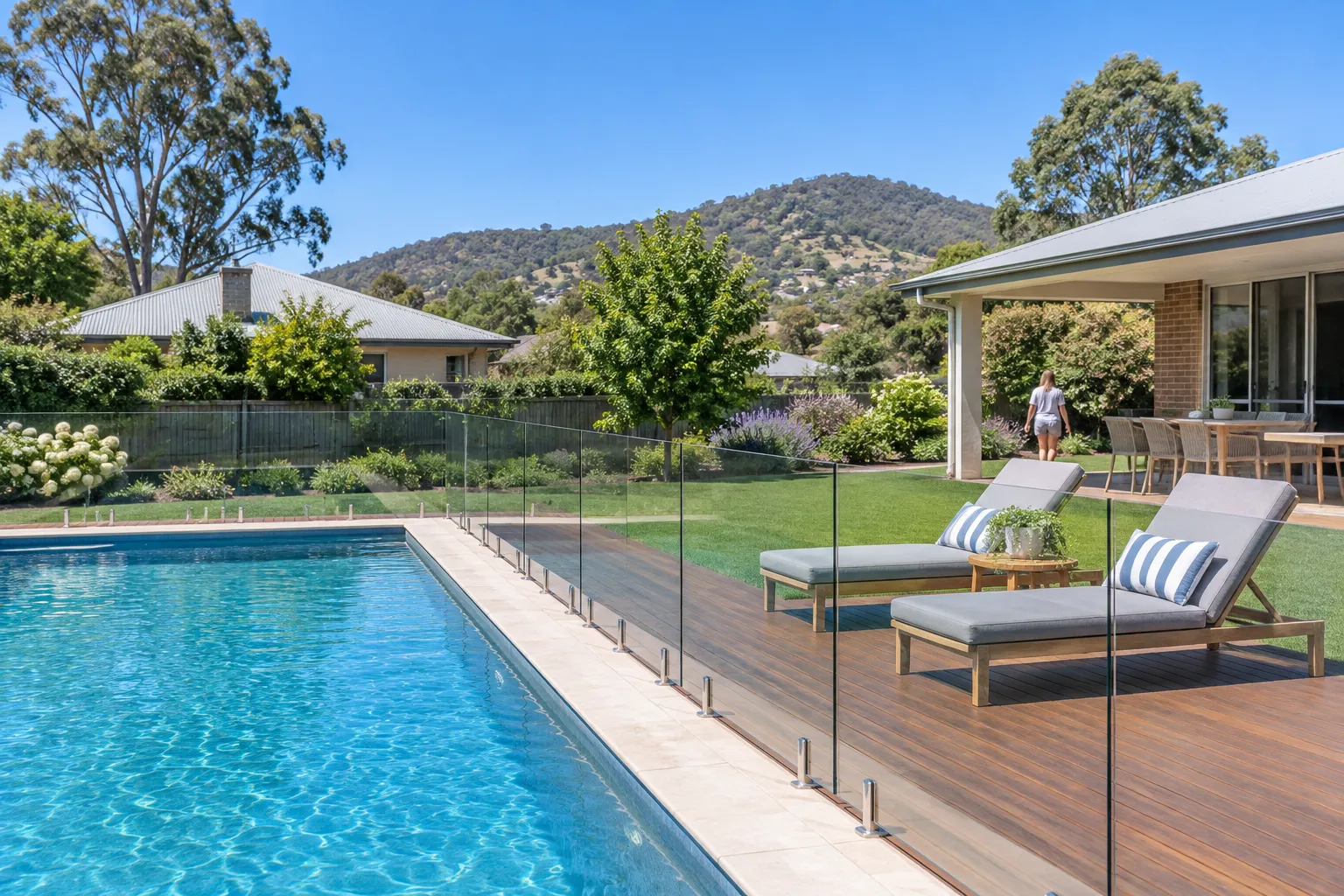
Timber can get slippery when wet, especially if algae or mould grows in shady spots, or if a film-forming stain has made the surface smooth. Penetrating oils keep more of the timber's natural grip than glossy finishes. Some boards have a grooved or reeded face that adds grip. Wash the deck regularly to keep algae away.
Does chlorine damage timber decking?
Splashes of chlorinated or salt water don't usually harm a well-oiled hardwood deck, but they can dry out the surface and lighten the colour over time, especially near the pool edge. Rinse the deck with fresh water now and then, and re-oil when water stops beading. Store pool chemicals off the deck, because concentrated chemicals can mark timber.
What about merbau tannin around pools?
New merbau leaches red-brown tannin when it gets wet, which can stain concrete, coping, render and pool surrounds. If you choose merbau near a pool, rinse it thoroughly for several weeks before the pool is filled or the surrounds are finished, and protect pale surfaces nearby. Once it has weathered and been oiled, tannin bleed is much less. See merbau decking.
How do you look after a timber pool deck?
Sweep it, rinse it with fresh water regularly in summer, wash it each season with a timber deck cleaner, and clean and re-oil it every 12 to 24 months, more often near the pool edge. Keep the gaps clear so water drains. Check for raised screws and splinters each spring, before the swimming season starts.
Published NSW guides put a professional clean and re-oil at about $15 to $35 a square metre. See deck oiling for timing and method.
Do pool fence rules apply to timber decks?
Yes, the same rules apply whatever the material. In NSW, the pool barrier must keep a non-climbable zone, and the NSW Government says objects mustn't be within 90 centimetres of the fence. Timber steps, benches and planters near the fence can make it climbable. On raised decks, the deck's balustrade may form part of the barrier.
For decks around above-ground pools, see over ground pool deck. For the composite alternative, see composite pool decking.
Questions people ask
Is timber or composite better around a pool?
Both work. Composite needs less upkeep near water and doesn't splinter. Pale hardwood looks natural, stays cooler in sun and can be sanded back if it wears. Timber needs oiling more often around pools. Many owners choose composite for the low upkeep, or spotted gum for the look and the cooler surface.
How often should you oil a timber pool deck?
Around a pool, plan to clean and oil a timber deck about every 12 months, and the boards right by the pool edge may need a top-up more often. Sun, splashing and pool chemicals dry the surface faster than on an ordinary deck. When water stops beading on the boards, it's time.
Can treated pine be used around a pool?
Yes, treated pine is used around pools, especially for budget above-ground pool decks. It's softer than hardwood and more likely to splinter as it ages, so it needs regular oiling and checks for rough spots. Use the right treatment class for the frame, and seal cut ends. See treated pine decking.
What gap should timber pool decking boards have?
Timber pool decking boards usually need a small gap, often around 3 to 5 millimetres, so water drains and the boards can swell when wet. Tighter gaps trap water and dirt, and wider gaps can catch small toes. The builder sets the gap to suit the timber and the moisture in the boards on the day.
The rest of our guides start from deck builder across Albury.
Where these facts come from
- Business Queensland, spotted gum timber properties
- NSW Government, owning a pool or spa: your obligations
- Published installed decking and oiling prices from Australian cost guides, checked November 2026
Updated