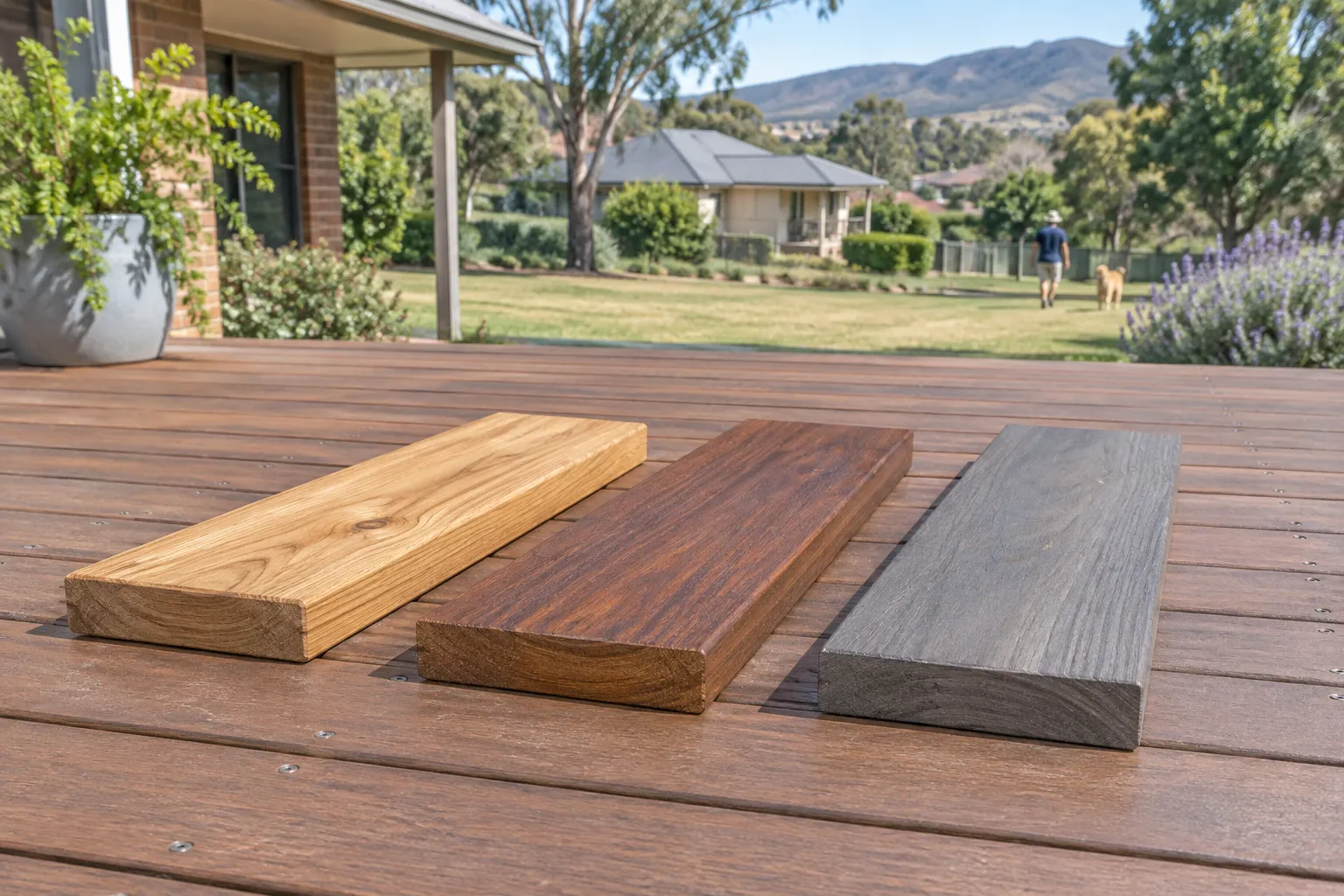
Deck stain and tinted oil colours range from clear and natural through merbau, brown and walnut tones to greys and near-black. The timber limits the choice: stains add colour on top of the wood's own, so dark merbau can go darker but not paler, while pale timbers like treated pine and blackbutt take almost any colour. In Albury's summer sun, darker colours make the deck hotter underfoot. Testing on an offcut is the only reliable way to see the result. For oil versus stain and costs, see our main deck oiling, staining and restoration page.
What colours can deck stains come in?
Most decking brands sell tinted oils and stains in a set of standard colours, usually grouped into natural, red-brown, brown, grey and dark tones. Some offer custom tints. The same colour name can look different on different timbers, because the stain mixes with the wood's own colour. The tin colour is a guide, not a promise.
| Colour family | Looks like | Suits |
|---|---|---|
| Clear or natural | The timber's own colour, richer | Spotted gum, blackbutt |
| Merbau or red-brown | Classic Australian deck | Merbau, pine wanting warmth |
| Brown or walnut | Deeper, warmer | Merbau, older homes |
| Grey or silver | Weathered, modern | Pale timbers, modern homes |
| Charcoal or black | Bold, contemporary | Covered decks, modern homes |
What colours suit each timber?
Pale timbers take the widest range of colours. Treated pine and blackbutt can go natural, grey, brown or dark. Spotted gum's varied tones suit natural or light tints, which even it out. Merbau is already dark red-brown, so merbau, brown and darker tones suit it, while greys and pale tones look muddy over its red base.
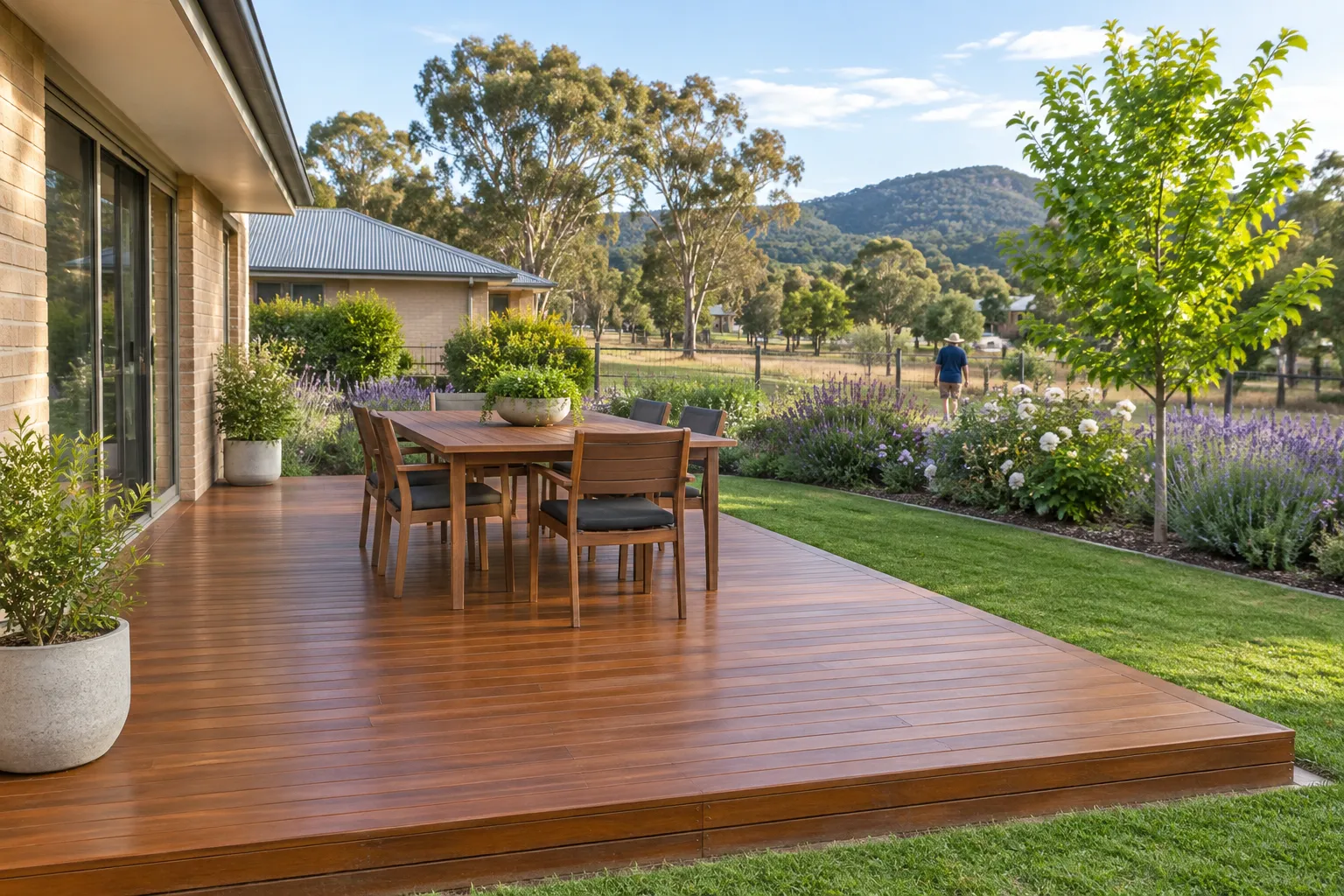
- Treated pine. Almost anything. Tints also hide the green tinge from treatment.
- Blackbutt. Natural to keep it pale, or grey for a modern look.
- Spotted gum. Natural or a light tint to even out colour.
- Merbau. Merbau, brown, walnut or darker.
See stain merbau decking and treated pine decking stain.
Do dark deck colours get hot?
Yes. Dark stains absorb more sunlight, so a charcoal or dark brown deck in full Albury sun gets noticeably hotter underfoot than a natural or light grey one. If the deck faces west or north and is used barefoot, choose a lighter tone, or plan shade from a pergola or patio roof. Under cover, dark colours work well.
How do you choose a deck colour for your house?
Match the deck to the house's fixed colours: brick or cladding, roof, gutters and window frames. Warm browns and merbau tones suit red and orange brick and older weatherboard homes. Greys and charcoal suit render, Colorbond roofs in greys, and black window frames. Natural tones sit comfortably with almost anything.
Tips for choosing:
- Hold samples against the house and existing paving.
- Look in morning and afternoon light.
- Think about the furniture and garden around the deck.
- Remember colour deepens with a second coat and with age.
What about grey deck stains?
Grey stains are popular for a modern or weathered look. They work best on pale timbers like treated pine and blackbutt, where the grey shows clearly. On merbau, grey usually looks muddy. Some greys mimic naturally weathered timber while still protecting it. Light greys stay cooler in sun than charcoal.
How do you test a deck stain colour?
Test on an offcut of the same timber, or a hidden board, prepared the same way as the deck: cleaned, dry and sanded if the deck will be. Apply the number of coats you'll use, let it dry, and look at it outside in daylight. Stain darkens with each coat and looks different wet and dry.
For product guidance, see best decking oil for merbau and Cabot's deck stain colours.
Questions people ask
What is the most popular deck stain colour?
Merbau and natural tones are among the most popular deck colours in Australia, because they suit many homes and timbers and look like a classic timber deck. Greys have become popular on modern homes. Popularity matters less than what suits your timber, your house and how much sun the deck gets.
Can you change the colour of a stained deck?
Going darker is usually easy: clean the deck and apply the darker tint. Going lighter is hard, because you have to remove the existing colour by sanding or stripping back to bare timber first. Dark merbau can't be stained pale. Plan for a colour you'll be happy with for a while.
Do deck stains fade?
Yes. All deck stains and tinted oils fade over time in sun, which is why they need recoating every 12 to 24 months in Albury. Tinted products fade more evenly than clear oils and give a little more UV protection. Solid stains fade more slowly but eventually crack and peel.
Does deck stain colour affect how long it lasts?
Somewhat. More pigment means more UV protection, so tinted and darker stains often hold up a little longer than clear finishes. But darker colours also absorb more heat, which can make the surface work harder in summer. Preparation and regular recoating matter more than the colour itself.
The rest of our guides start from the deck builder guide for Albury.
Where these facts come from
- Cabot's Natural Decking Oil, product data sheet
Updated