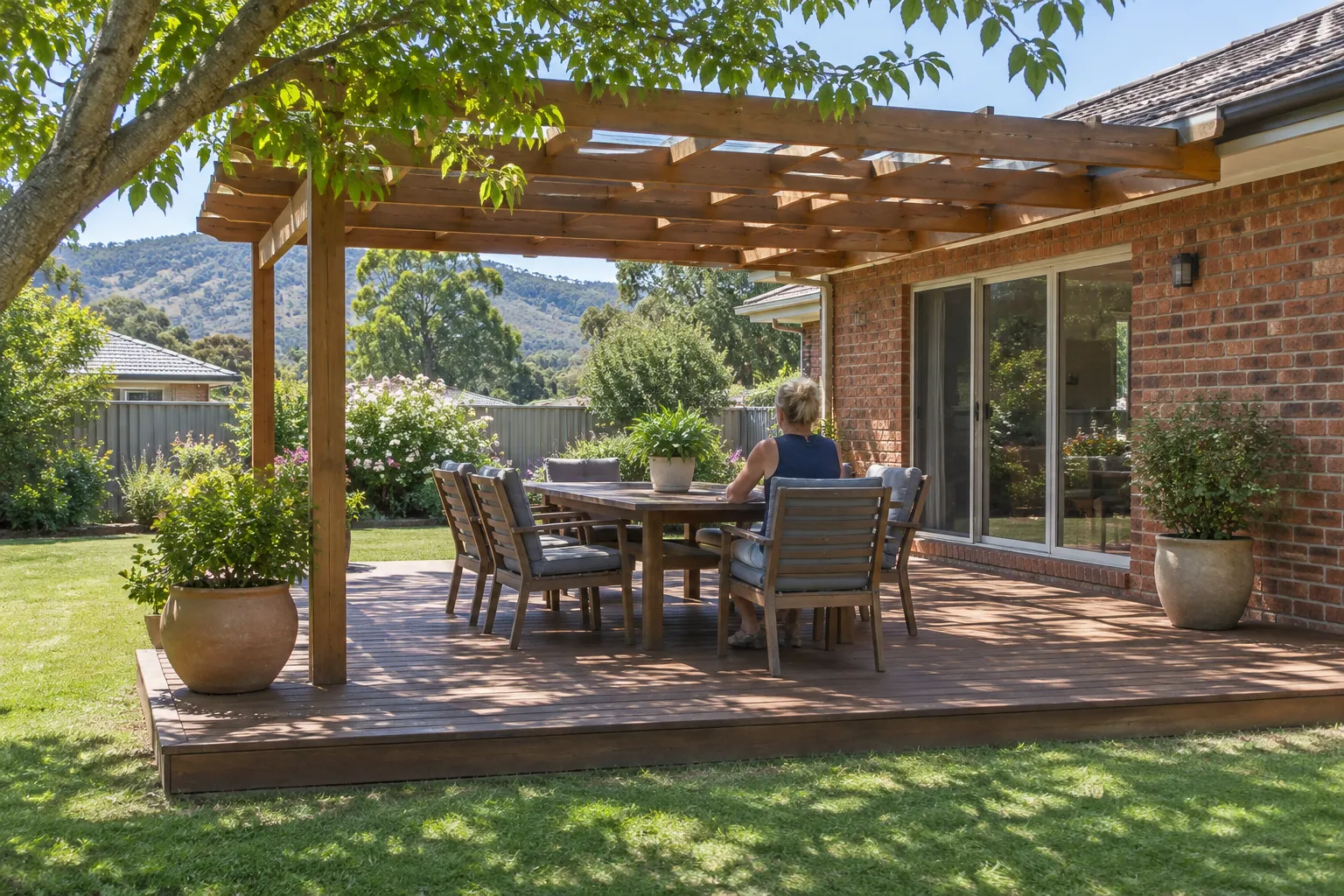
Timber pergola designs range from traditional open frames with decorative beam ends and climbing plants, to modern flat-roof timber pergolas with clean lines and a polycarbonate or Colorbond roof. Treated pine is the budget timber, while hardwoods like spotted gum and blackbutt last longer and look richer. An open timber pergola usually costs about $3,000 to $7,000 installed in published guides. For roofs, kits and approval, see our main deck and pergola builders page.
What timber pergola styles are there?
The main timber styles are the traditional open pergola, with posts, beams and spaced rafters, often with shaped ends; the flat-roof timber pergola, with a low, clean profile and a light roof; the gable timber pergola, with a peaked roof; and the arbour, a small arched or flat frame over a path or gate. Each suits different homes and uses.
| Style | Look | Suits |
|---|---|---|
| Traditional open | Rafters, shaped beam ends | Older homes, gardens |
| Flat roof timber | Clean, low profile | Modern and single-storey homes |
| Gable timber | Peaked, airy | Larger spaces, character homes |
| Arbour | Small frame over a path | Gardens and entries |
What is a flat roof timber pergola?
A flat roof timber pergola has a nearly flat roof, with just enough fall to drain, on timber posts and beams. It's often roofed with polycarbonate or Colorbond, or left open with closely spaced battens for shade. It suits modern homes that want a timber feel without a heavy look, and fits easily under existing gutters.
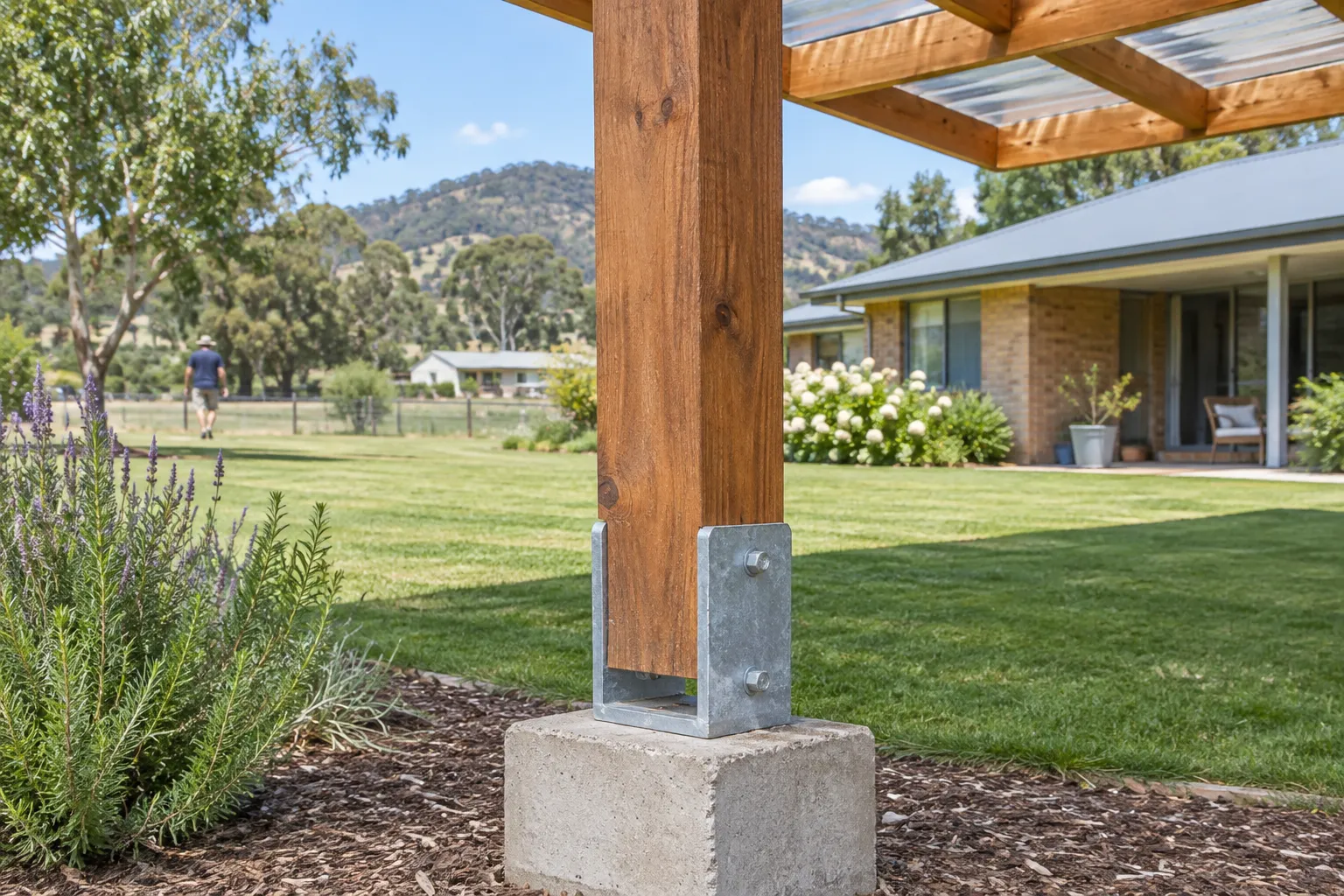
Design tips for a flat roof:
- Allow enough fall for water to drain to a gutter.
- Use deeper beams if you want fewer posts.
- Keep the roof pale or translucent to stay cool.
- Match the timber colour to a deck or window frames.
Which timber suits a pergola?
Treated pine is affordable and easy to work, and needs painting or oiling. Hardwoods like spotted gum and blackbutt are rated class 1 above ground, stronger for long spans and richer looking, but cost more. Cypress pine is naturally durable and popular for rustic styles. Posts in or near the ground need H5 treated pine, or galvanised stirrups on concrete.
How do you finish a timber pergola?
Paint or oil it. Paint gives a solid colour and lasts well on vertical posts and beams that don't get walked on, and suits weatherboard homes. A penetrating oil or stain keeps the timber look and is easy to recoat. In Albury's sun, recoat every few years, more often on the sunniest faces. Seal cut ends of treated pine.
See deck oiling for timber finishes.
Can a timber pergola have a roof?
Yes. Timber pergolas often carry polycarbonate, Colorbond or shade cloth roofs. A solid roof adds weight and wind load, so beams, rafters and footings must be sized for it. If you might add a roof later, size the frame for it from the start. In Victoria, a roofed pergola attached to the house generally needs a building permit.
See Colorbond vs polycarbonate pergola roofing and pergola approval.
How do you make a timber pergola last?
Keep posts clear of the soil on galvanised stirrups or brackets set in concrete, use the right treated timber or durable hardwood, seal cut ends, use galvanised or stainless fixings, keep it painted or oiled, and make sure water drains off the beams. Check fixings and the post bases every few years.
Timber or steel pergola: which is better?
Timber looks warmer, suits traditional homes and is easy to adapt, but needs paint or oil and can move or rot if neglected. Steel and aluminium need less upkeep, span further and suit modern homes, but look more industrial and cost more. Many builders combine steel posts with timber beams or a timber-look finish.
See pergola designs and Colorbond pergolas.
Questions people ask
What is the best timber for a pergola?
Hardwoods like spotted gum and blackbutt are among the longest-lasting and strongest pergola timbers, rated class 1 above ground. Treated pine is cheaper and easier to work, and lasts well with paint or oil and posts kept off the soil. Cypress pine suits rustic designs. Your budget and the look you want usually decide it.
How much does a timber pergola cost?
Published Victorian guides put an open timber pergola at about $3,000 to $7,000 installed. Adding a polycarbonate roof takes it to about $5,000 to $12,000, and Colorbond to about $6,000 to $15,000. Hardwood costs more than treated pine. A written quote after a site visit gives the real figure.
Do timber pergolas need maintenance?
Yes. Timber pergolas need repainting or re-oiling every few years, more often on faces in full sun, plus checks of fixings, post bases and any roof. Well-maintained timber pergolas last a long time. Neglected ones can rot at the post bases or where water sits on beams.
Can you grow plants on a timber pergola?
Yes, open timber pergolas are ideal for climbing plants like wisteria, grapes or ornamental vines, which give summer shade and let winter sun through if they're deciduous. Heavy vines add weight, so the frame should be strong enough, and keep plants from trapping water against the timber.
This guide is one of many on deck builder in Albury.
Where these facts come from
- Business Queensland, spotted gum timber properties
- WoodSolutions, preservative treatments and use classes
- Published installed pergola prices from Australian cost guides, checked November 2026
Updated