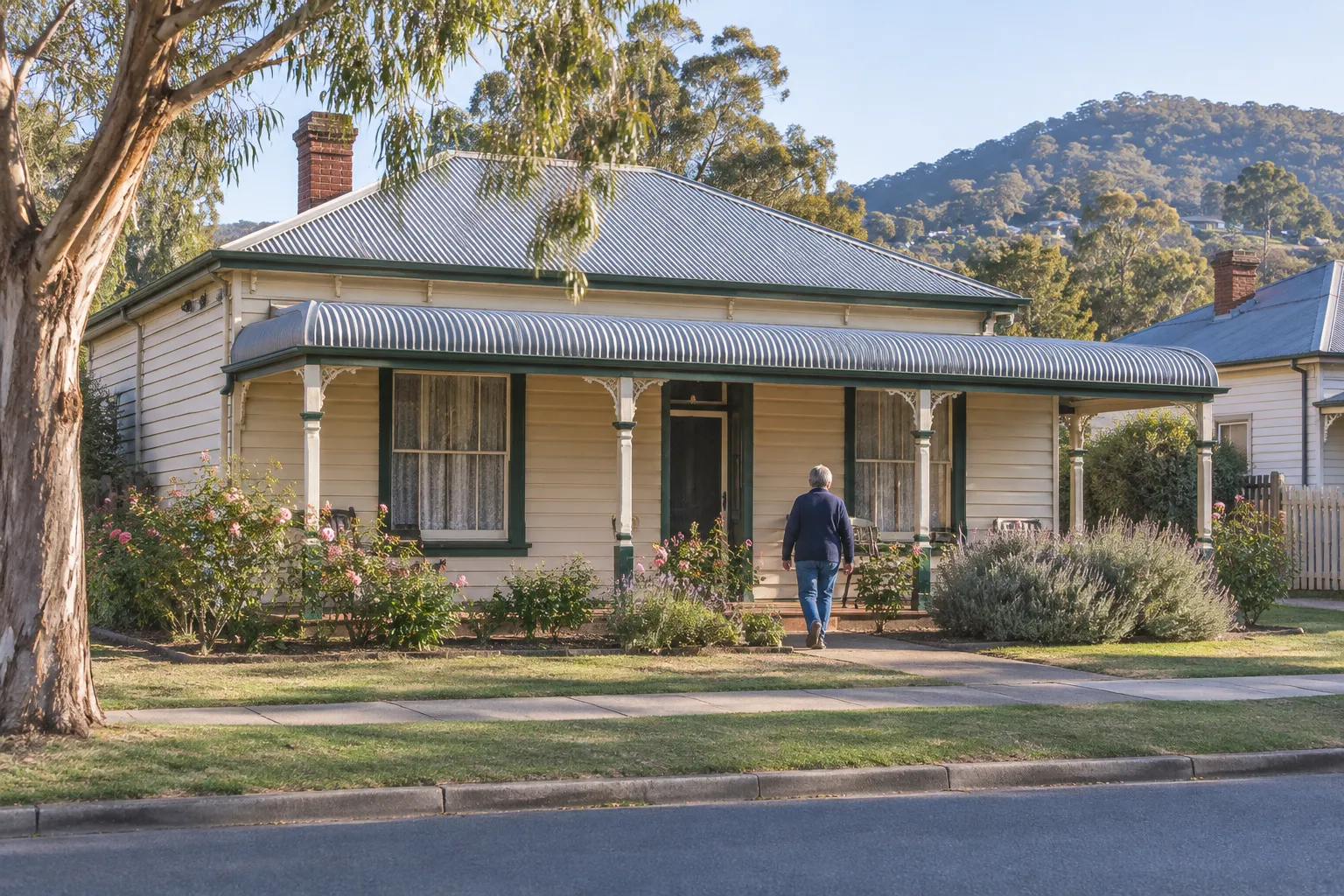
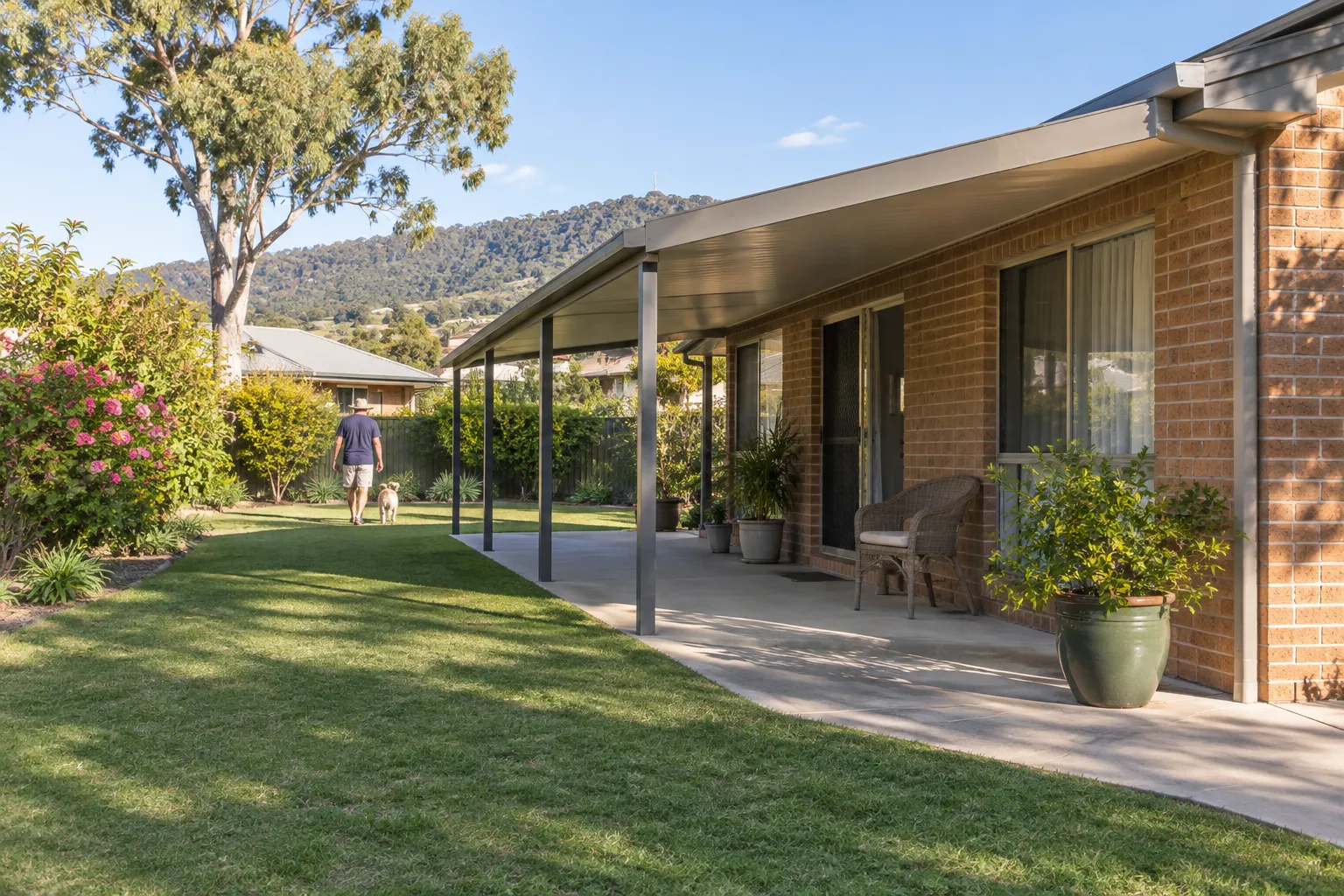
In Australia, a verandah usually means a roofed, open-sided area running along the front or side of a house, often in a traditional style such as a bullnose curve. A patio usually means a covered outdoor living area at the back of the house, often a modern flat, skillion or gable roof in Colorbond or insulated panels. Structurally they're similar, both roofed and attached, and in Victoria both are treated as verandahs for building permits. For verandah styles and costs, see our main verandahs page.
How do verandahs and patios differ?
The differences are mostly position and style rather than structure. Verandahs often wrap the front or sides of older homes, with traditional details. Patios sit at the back and are designed as outdoor living and dining spaces, often with modern roofs, lights, fans and blinds.
| Verandah | Patio | |
|---|---|---|
| Usual position | Front or side | Back |
| Style | Traditional, often bullnose or curved | Modern flat, skillion or gable |
| Purpose | Shade the house, shelter entries | Outdoor living and dining |
| Roof | Solid | Solid |
| Victorian building permit | Needed | Needed, treated like a verandah |
How does an alfresco fit in?
An alfresco is usually built under the house's main roof, off the kitchen or family room, as part of the original house. A patio is added later with its own roof, often extending an alfresco. A verandah runs along the outside of the house. Real estate ads sometimes use "alfresco" for any covered outdoor dining area.
See pergola vs patio vs alfresco.
Which suits an older Albury home?
On older homes in central Albury, Lavington, Beechworth and Yackandandah, a verandah in keeping with the house's era often looks most natural, with details like bullnose roofs, timber posts and fretwork. At the back of the same house, a simple patio for outdoor living works well. In heritage areas, the design may need a planning permit.
Which suits a newer home?
On newer homes in Thurgoona, Leneva and Baranduda, a patio at the back, often extending an existing alfresco, is the usual choice, with a flat, skillion or gable roof in Colorbond or insulated panels and posts that match the window frames. A front verandah can add street appeal, but many modern designs use a smaller entry canopy instead.
Do they cost the same?
Similar structures cost similar amounts. Published guides put a roof-only verandah or patio at about $200 to $340 a square metre for flat or skillion styles, $250 to $430 for gable, and about $350 to $600 for insulated panels. Traditional verandah details, such as curved bullnose roofs and decorative posts, can add to the cost.
See patio cost.
Do verandahs and patios need permits?
In Victoria, the VBA says verandahs need a building permit, and roofed patios attached to the house are treated the same way. In NSW, a verandah or patio can be exempt if it meets every standard for size, height, setbacks and location. In heritage areas, a planning permit for external changes is often needed too.
See do you need approval to enclose a verandah.
Questions people ask
Is a patio the same as a verandah?
Structurally, often yes: both are roofed, open-sided areas attached to the house. The difference is usually position and style: verandahs along the front or side in traditional styles, patios at the back for outdoor living. In Victoria, both are treated as verandahs for building permits.
What is a verandah called in other countries?
In the United States, a similar structure is usually called a porch. In the UK, "veranda" is used, as well as "porch" for small entry structures. In Australia, "verandah" with an h is the common spelling, and both spellings are correct.
Can a verandah be at the back of the house?
Yes. A verandah can run along any side of the house, including the back. At the back, people often call it a patio, especially when it's used for outdoor living. The name matters less than the design and how it suits the house.
Should I choose a verandah or a patio?
Choose by where you want shelter and how you'll use it. For shading the front or side of the house and sheltering entries, a verandah. For a covered outdoor living and dining area at the back, a patio. On many homes, both work together. See verandahs and deck and patio builders.
The rest of our guides start from deck builder in Albury.
Where these facts come from
- Victorian Building Authority, landscaping and outdoor structures
- Published installed patio and verandah prices from Australian cost guides, checked November 2026
Updated