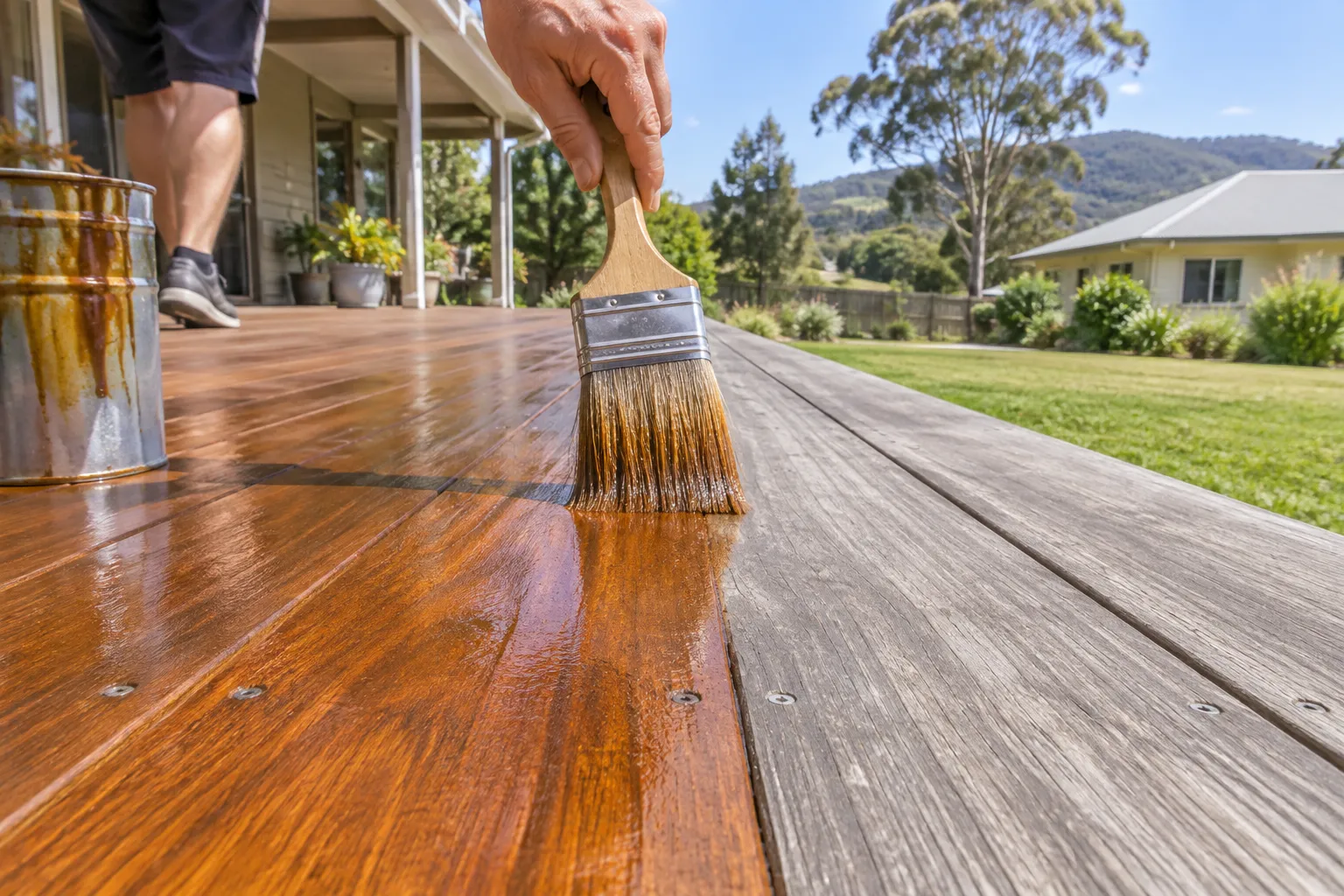
Decking timber oil is a penetrating finish that soaks into an outdoor timber deck to slow water getting in, reduce sun damage and enrich the timber's colour. Most products are based on natural drying oils such as linseed or tung, modified synthetic oils, or water-based emulsions, with additives for UV protection and, in some, resistance to mould. They differ in how deep they penetrate, how fast they dry and how they clean up. For when and how to oil, see our main deck oiling, staining and restoration page.
What is decking oil made of?
Decking oils are usually made from a drying oil that hardens in the timber, such as linseed or tung oil, or a modified or synthetic oil, carried in either a solvent or water. Many add UV absorbers, pigments for tinted versions, and agents that resist mould and mildew. The exact formula is the maker's, and the label and data sheet list what matters for use.
| Ingredient type | What it does |
|---|---|
| Drying oil (linseed, tung) | Soaks in and hardens in the timber |
| Synthetic or modified oils | Faster drying, more consistent |
| Solvent carrier | Helps deep penetration, slower drying |
| Water carrier | Faster drying, water clean-up, lower odour |
| Pigment | Colour and extra UV protection |
| Mould inhibitors | Slow mould and mildew growth |
How does decking oil protect timber?
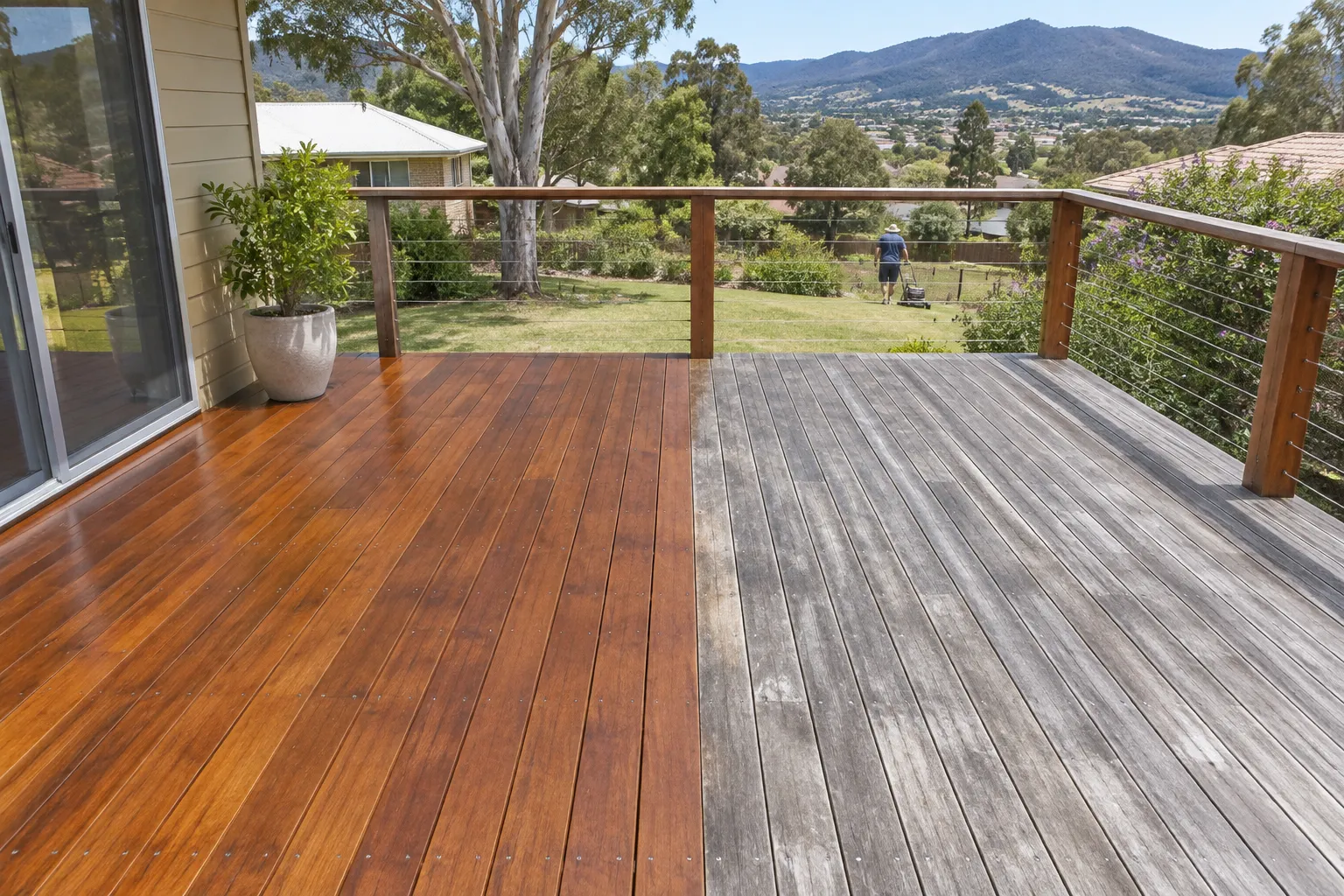
Decking oil works by soaking into the outer layer of the timber and filling the pores, so water beads off instead of soaking in. That slows the swelling and shrinking that cause cracking and cupping. UV absorbers and pigments slow the breakdown of the surface fibres by sunlight, which is what turns timber grey. It doesn't form a hard film, so it doesn't peel.
What's the difference between oil-based and water-based decking oils?
Oil-based decking oils use a solvent carrier, penetrate deeper into dense timbers and give a richer colour, but take longer to dry and clean up with solvent. Water-based decking oils dry faster, have less odour and clean up with water. Cabot's lists a 6 hour recoat time at 25 degrees for its natural oil. Intergrain's water-based UltraDeck says it handles light rain on the day.
Natural oil or tinted oil?
Natural, or clear, oils enhance the timber's own colour and let the grain show fully, but they give less UV protection, so the deck greys sooner. Tinted oils add a little pigment, which evens out colour differences between boards and adds UV protection. In Albury's strong sun, a tinted oil often lasts a little longer between coats.
See stain deck colours for choosing a tint.
How do you choose a decking oil for your timber?
Start with the timber. Dense, oily hardwoods like merbau and spotted gum need an oil made to penetrate dense timber. Treated pine absorbs more and takes almost any oil. Then choose oil-based or water-based by how fast you need it to dry and how you prefer to clean up, and a natural or tinted finish by the look you want.
A quick guide:
- Merbau. Penetrating oil, often merbau tinted. See best decking oil for merbau.
- Spotted gum and blackbutt. Penetrating oil for dense hardwoods, natural or light tint.
- Treated pine. Tinted oil to hide the green tinge.
- Covered decks. Either type, less UV stress.
What should you read on a decking oil label?
Check what timbers it suits, whether it's oil-based or water-based, the coverage in square metres per litre, the drying and recoat times and the conditions they're quoted at, the weather limits for application, clean-up, and any safety notes about disposing of oily rags. The data sheet often has more detail than the tin.
How do you apply decking oil?
Clean the deck, let it dry for two or three fine days, then apply thin coats along the grain with an applicator or brush, two or three boards at a time, wiping off excess after about 15 minutes. Apply a second coat after the recoat time. For the full method, see how to oil a deck.
Dispose of oily rags safely by laying them flat outdoors to dry, because rags soaked in drying oils can heat up and catch fire if bundled together.
Questions people ask
Is linseed oil good for decks?
Raw linseed oil alone isn't ideal for decks, because it dries slowly, can stay tacky and can encourage mould in damp conditions. Decking oils that contain modified linseed or other oils, with UV and mould additives, are formulated for outdoor decks and usually perform better. Use a product made for decks.
Do decking oils contain UV protection?
Most decking oils include some UV protection, and tinted versions add more through their pigment. Clear oils protect against water but let more sunlight through, so the timber greys faster. Check the label for UV claims, and choose a tinted oil for decks in full Albury sun.
Is decking oil waterproof?
Decking oil makes timber water repellent rather than fully waterproof. It slows water soaking in, so water beads and runs off, but timber can still take up some moisture. As the oil wears, water soaks in more easily, which is the sign it's time to recoat. No penetrating oil makes a deck completely waterproof.
Can decking oil be used on other outdoor timber?
Often, yes. Many decking oils can be used on outdoor furniture, pergolas, fences and steps, as long as the label says so. Some furniture and joinery need different products. Check the label for the surfaces it's designed for, and test on a hidden spot first.
The rest of our guides start from Border Outdoor Living deck builder.
Where these facts come from
- Cabot's Natural Decking Oil, product data sheet
- Intergrain UltraDeck Timber Oil, product data sheet
Updated