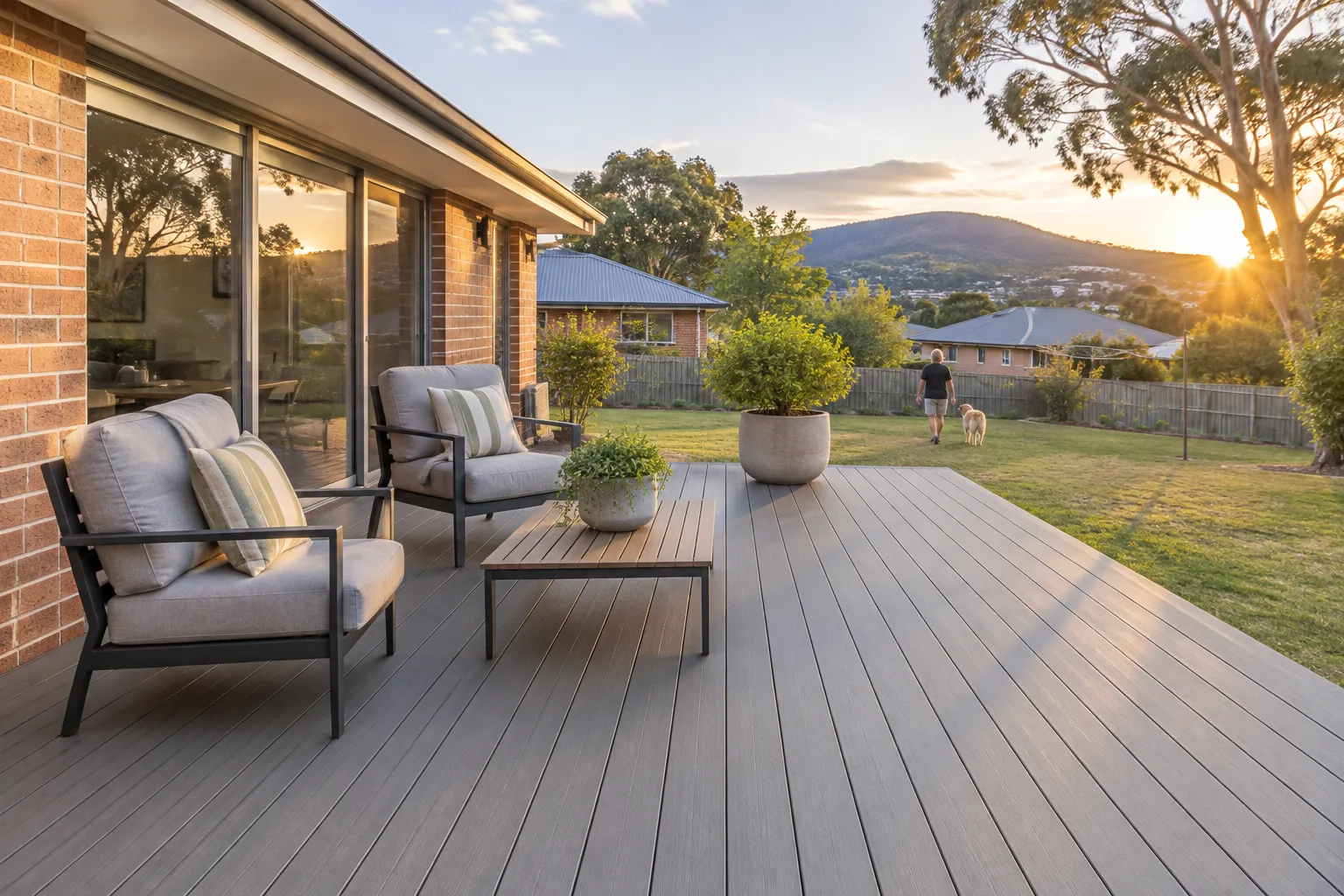
ModWood composite decking is an Australian-made wood-plastic composite board, made mainly from reclaimed radiata pine and recycled plastic. ModWood says it was Australia's first maker of wood-plastic composite products, and its boards are made locally for Australian conditions. Like other composites, it needs no oiling, doesn't rot and resists termites, but it costs more upfront than treated pine. For how composite decking works and what it costs in general, see our main composite decking page. This page is about ModWood.
What is ModWood made of?
ModWood boards are a wood-plastic composite. Published product information says around 90% of the board weight is reclaimed radiata pine shavings and recycled plastic milk bottles, and an environmental product listing gives a breakdown of about 55% wood flour from FSC or PEFC sources, with recycled high-density polyethylene and additives making up the rest. The wood gives a timber look and feel. The plastic keeps out water and insects.
Because the wood content is relatively high, ModWood feels closer to timber than some all-plastic or high-plastic boards. Check the current product sheet for the range you're considering, since ranges and blends change.
Is ModWood good for Albury's climate?
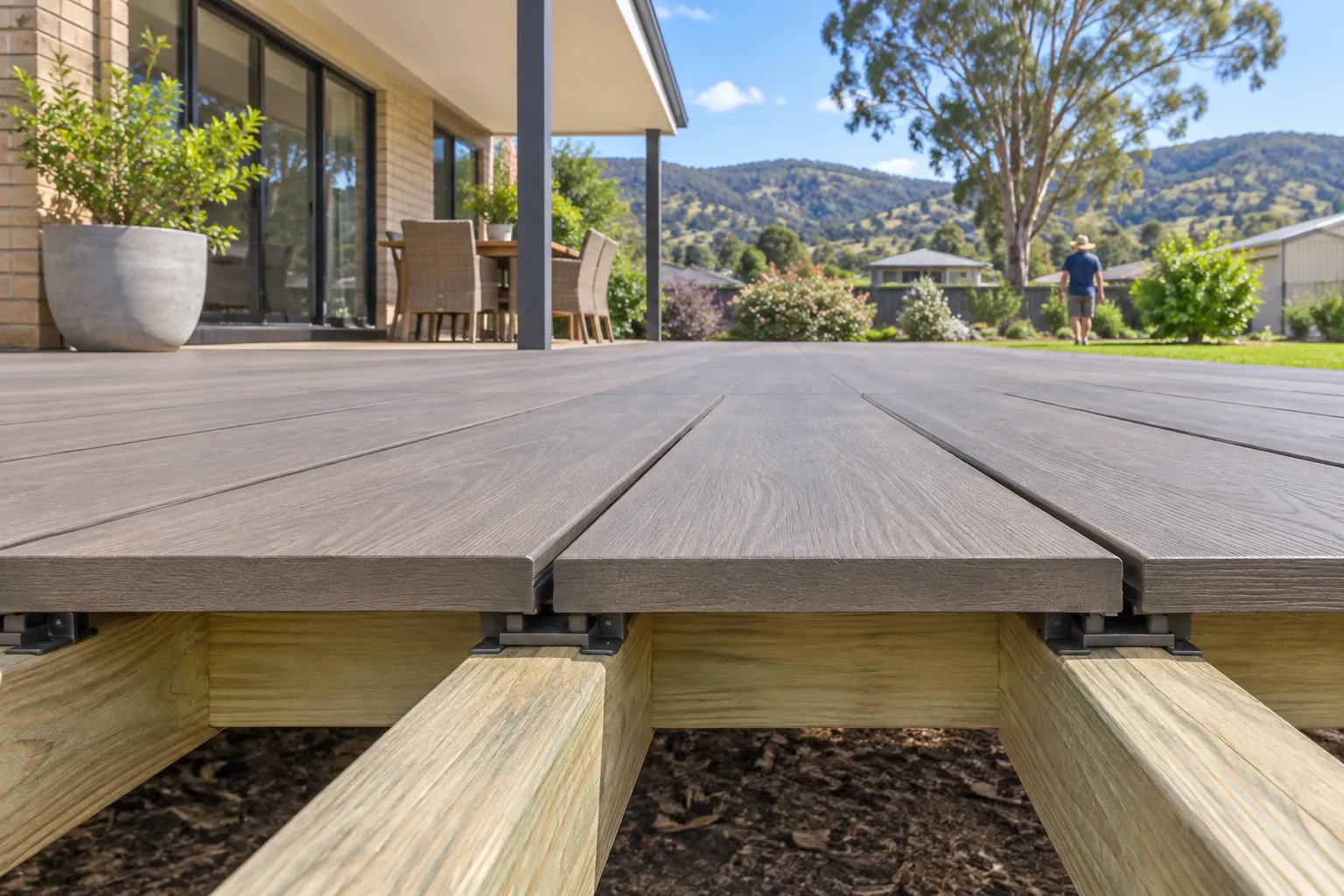
ModWood is designed for Australian conditions and handles wet winters and frost well, because it doesn't rot or split like timber. As with any composite, it moves with temperature, so end gaps and joist spacing must follow the installation guide. Darker colours get hot in direct summer sun, so lighter shades or shade suit west-facing Albury decks.
Practical points for an Albury ModWood deck:
- Expansion gaps. Set to the guide for board length and install temperature.
- Ventilation. Leave airflow under low decks.
- Colour. Test samples in afternoon sun before choosing.
- Bushfire. On mapped blocks, check the range's tested bushfire rating against your BAL.
What colours does ModWood come in?
ModWood comes in a range of browns, greys and natural timber tones, with some ranges offering a more varied, timber-like colour blend. Colours vary between ranges and change over time. Lighter tones stay cooler and hide dust, darker tones look striking but get hot in full sun. Order samples to see them in your light.
See ModWood decking colours for more on choosing a shade.
How much does a ModWood deck cost?
ModWood is priced in the same general range as other composites. Published Australian guides put standard composite decks at about $280 to $700 a square metre installed, and premium capped ranges at about $450 to $900. The range, height, frame and site move the price most. A builder's written quote gives the real figure for your deck.
See composite decking cost for totals by size.
How does ModWood compare with Trex and other brands?
ModWood's main difference is that it's made in Australia, with a relatively high share of reclaimed timber. Trex is made overseas and is known for its very high recycled content. Millboard uses a resin and mineral composite instead of wood. Ekodeck and Eva-Last have their own blends and ranges. The cap, warranty and look usually matter more than the brand name.
| Brand | Core | Made |
|---|---|---|
| ModWood | Reclaimed pine and recycled plastic | Australia |
| Trex | Reclaimed wood and recycled plastic film | Overseas |
| Millboard | Resin reinforced with mineral | Overseas |
See best composite decking and Trex composite decking for comparisons.
How is ModWood installed?
ModWood boards are laid on a treated pine or steel frame at the joist spacing ModWood specifies, fixed with the recommended clips or screws, with the side and end gaps from the installation guide. Following the guide keeps the warranty valid. A builder who installs ModWood regularly will know its details for stairs, borders and fascia.
For the method, see composite decking installation.
How do you look after a ModWood deck?
Sweep it regularly, wash it a few times a year with soapy water and a soft brush, keep the gaps clear, and rinse off spills before they dry. Follow ModWood's care guide for cleaners. No oil or stain is needed. Shady, damp areas may need washing more often to stop mould. See cleaning composite decking.
Questions people ask
Is ModWood really made in Australia?
ModWood describes itself as Australian made and owned, and says it was Australia's first manufacturer of wood-plastic composite products. Its boards are made from reclaimed radiata pine and recycled plastic. If buying locally made matters to you, ask the supplier to confirm the origin of the specific range in your quote.
Does ModWood fade?
Like all outdoor materials, ModWood changes a little in strong sun, especially in the first months. Capped and premium ranges resist fading better than basic ranges. Lighter colours tend to show change less than very dark ones. Check the fade warranty on the range you choose, and keep the deck clean.
Is ModWood better than timber?
ModWood is better than timber for low upkeep, because it needs no oiling and won't rot or splinter. Timber, especially pale hardwood, is cooler underfoot and can be sanded back. Some hardwoods are listed as bushfire resisting. The choice depends on budget, upkeep and the site. See hardwood decking vs composite.
Can ModWood be used around pools?
Yes, composite boards like ModWood are often used around pools, because they don't splinter or rot. Choose a lighter colour so it stays cooler underfoot, check the range is suitable for wet areas, and keep the pool barrier rules in mind when planning the deck. See composite pool decking.
For the wider picture, start with deck builder in Albury.
Where these facts come from
- ModWood, about us
- Global GreenTag, ModWood decking product listing
- Published installed composite decking prices from four Australian cost guides, checked November 2026
Updated