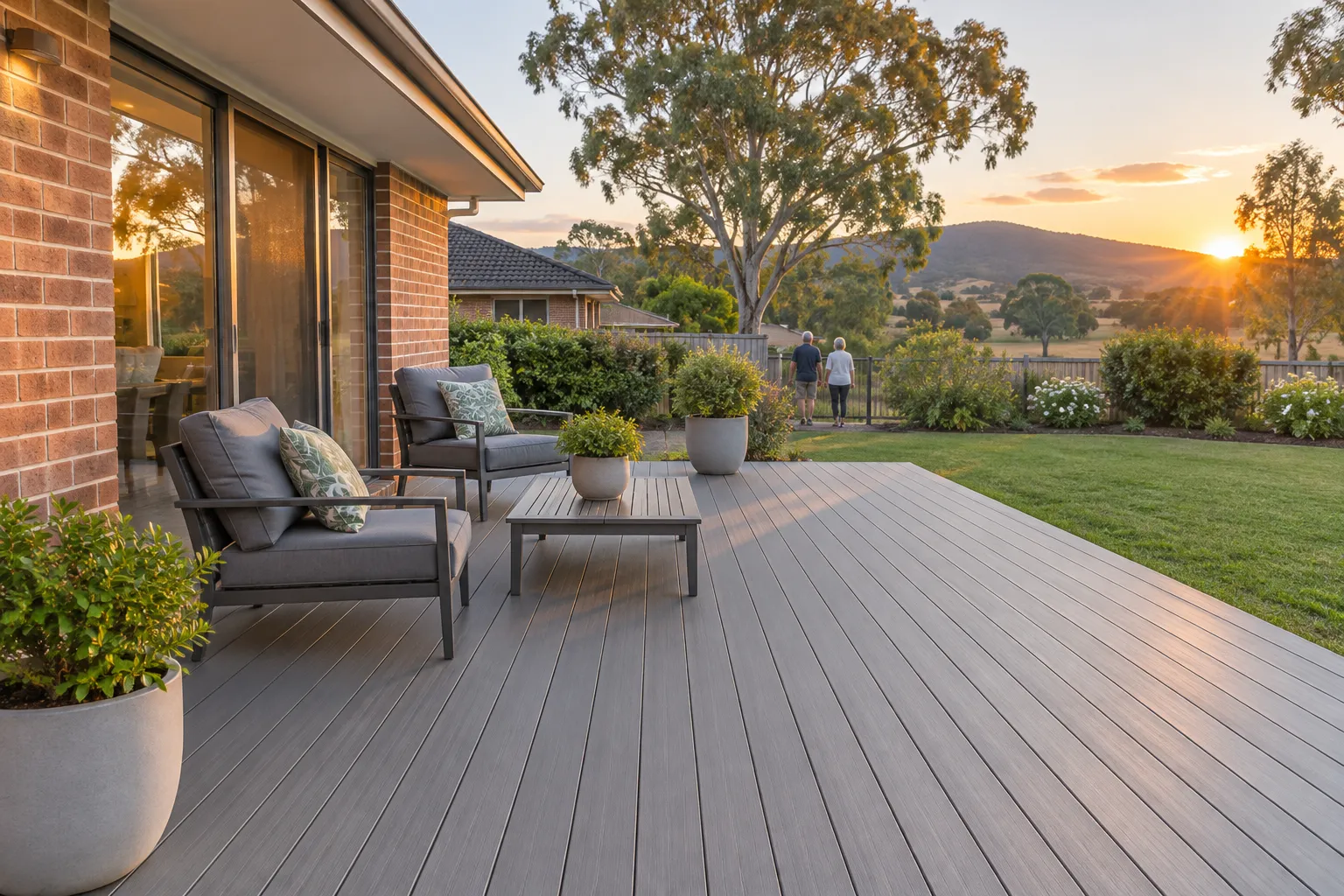
Trex composite decking is a wood and plastic composite board made by Trex Company, a US manufacturer that sells in Australia through local stockists, including large steel and outdoor suppliers. Trex says its boards are made from 95% recycled materials, including reclaimed wood and polyethylene film. Most current ranges are capped, which helps them resist fading and stains. Like all composites, Trex needs no oiling but costs more upfront than treated pine. For how composite compares with timber and what it costs generally, see our main composite decking page. This page is about Trex specifically.
What is Trex composite decking made of?
Trex boards are a wood-plastic composite: reclaimed wood fibre and recycled polyethylene, heated, blended and formed into boards. Trex says the current Australian products are made from 95% recycled material. The plastic keeps out water and insects, and the wood adds weight and a timber look. Capped ranges add a tough outer shell over the core.
Older Trex product sheets listed a mix closer to half wood and half plastic, so the formula has changed over time. Check the current product sheet for the range you're quoted.
Can you buy Trex in Australia?
Yes. Trex has an Australian website with a list of where to buy, and its boards are sold through local stockists, including major steel and outdoor product suppliers with branches across NSW and Victoria. A builder can usually supply Trex as part of the quote, or install boards you've bought. Check stock and colours locally before you commit to a design.
What Trex ranges are there?
Trex sells several ranges in Australia, which differ mainly in the cap, the grain texture, the colour range and the warranty. Higher ranges, such as Transcend, are usually capped on more faces and carry longer fade and stain warranties. Entry ranges cost less. Ranges change from time to time, so compare the current product sheets.
What to compare between ranges:
| Feature | Why it matters in Albury |
|---|---|
| Cap coverage | Better resistance to sun, stains and mould |
| Colour range | Lighter colours stay cooler in summer |
| Surface texture | More grip, more natural look |
| Warranty length | Fade and stain cover for strong sun |
| Joist spacing | Affects how much frame you need |
What are the downsides of Trex decking?
Trex's main downsides are cost, heat and repairability. It usually costs more than treated pine and often more than entry-level composites. Darker colours get hot in direct summer sun. Like any composite, deep scratches can't be sanded out. The frame underneath is usually timber, which still needs good airflow and protection. Most complaints come from installs that didn't follow the maker's instructions.
Common issues and how to avoid them:
- Heat. Choose a lighter colour or plan shade on west-facing decks.
- Movement. Leave the end gaps Trex specifies for the temperature on install day.
- Sagging. Keep joists at the spacing Trex specifies, which may be closer than for hardwood.
- Mould in shade. Wash it a few times a year and keep gaps clear.
How much does a Trex deck cost?
Trex is priced like other premium composites. Published Australian guides put standard composite decks at about $280 to $700 a square metre installed, and premium capped boards at about $450 to $900. Trex's capped ranges generally sit in the middle to upper part of those ranges, depending on the line. A builder's written quote gives the real figure.
See composite decking cost for a breakdown by deck size.
How is Trex installed?
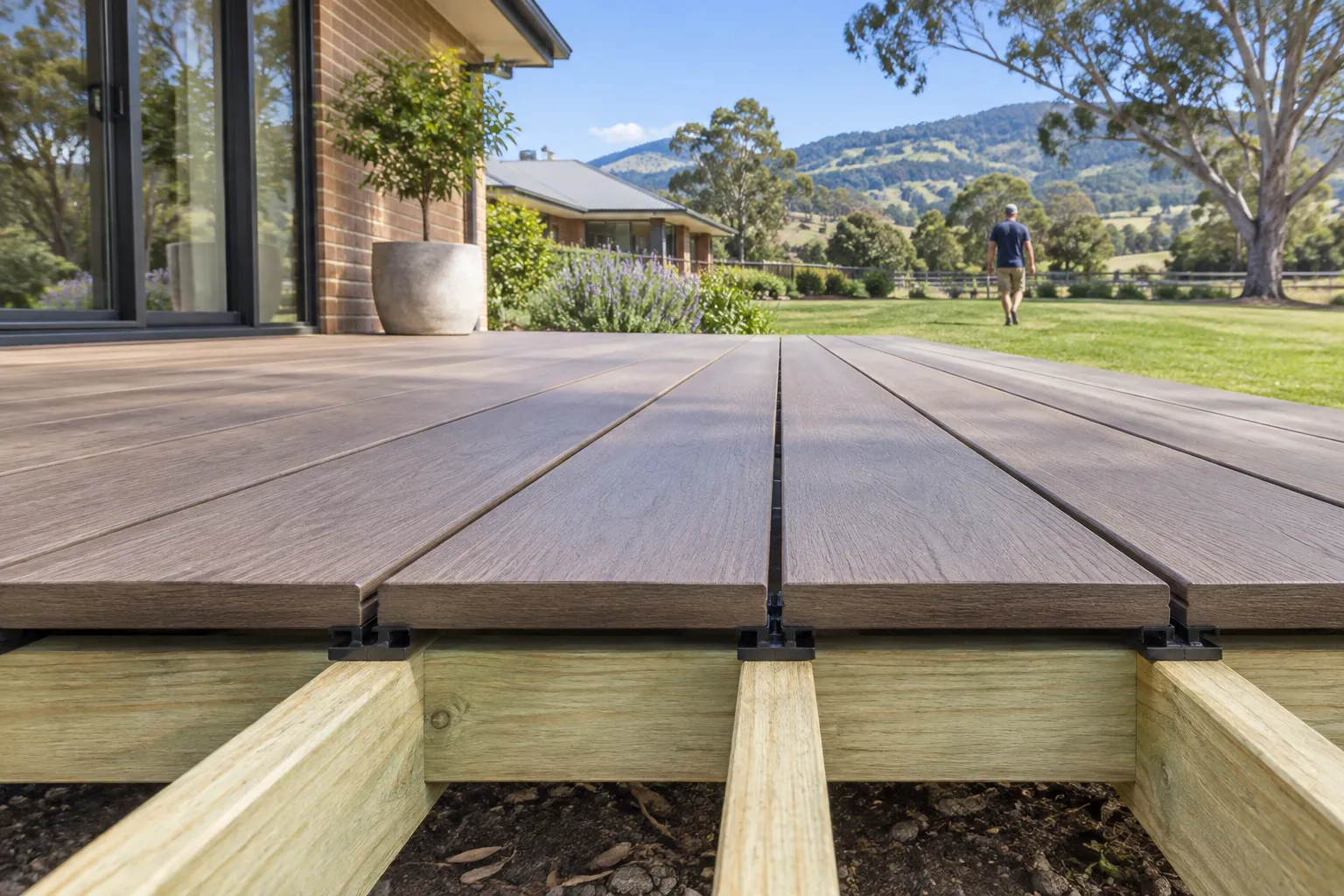
Trex boards go on a frame of treated pine or steel joists, fixed with Trex's own hidden clips or approved fasteners, at the joist spacing and gaps the installation guide specifies. Following the guide keeps the warranty valid. Cut ends, borders, stairs and fascia each have their own instructions. A builder who installs Trex often will know them.
For the general method, see composite decking installation. For a longer-lasting frame, see steel deck framing.
Trex vs other composites: which should you choose?
Trex, ModWood, Ekodeck, Millboard and Eva-Last all make capped boards sold in Australia. They differ in core material, look and warranty more than in basic performance. Trex is known for its high recycled content. ModWood is made in Australia. Millboard uses a resin and mineral composite rather than wood. Compare samples side by side in the sun.
See best composite decking for a comparison, or ModWood composite decking and Millboard composite decking.
Questions people ask
Is Trex decking good for Australian conditions?
Trex sells a dedicated Australian range and is widely used here. Its capped boards resist rot, termites and moisture well, which suits Albury's wet winters. Heat is the main thing to plan for: pick a lighter colour or add shade on decks in full afternoon sun, and follow the installation guide for expansion gaps.
How long does Trex decking last?
Trex's capped ranges carry long warranties, often 25 years or more depending on the line, and a well-built Trex deck can last that long or longer. The frame underneath usually decides the deck's real life. Check the current warranty for the exact range you're buying, and keep the paperwork.
What are common complaints about Trex decking?
The most common complaints about composite decks in general, including Trex, are surface heat in dark colours, scratches that can't be sanded out, and mould in shady spots. Problems like sagging or buckling usually trace back to joist spacing or gaps that didn't follow the installation guide. Choosing the right range and installer avoids most of them.
Which is better, Trex or PVC decking?
Trex is a wood-plastic composite, while PVC boards are all plastic. PVC is lighter and very water resistant. Trex feels more like timber and is more common in Australia. For most Albury backyards, a capped composite like Trex is the more usual choice, while PVC suits very wet areas.
The rest of our guides start from deck builder albury.
Where these facts come from
- Trex Australia, sustainable decking products
- Trex Australia, decking products
- Published installed composite decking prices from four Australian cost guides, checked November 2026
Updated