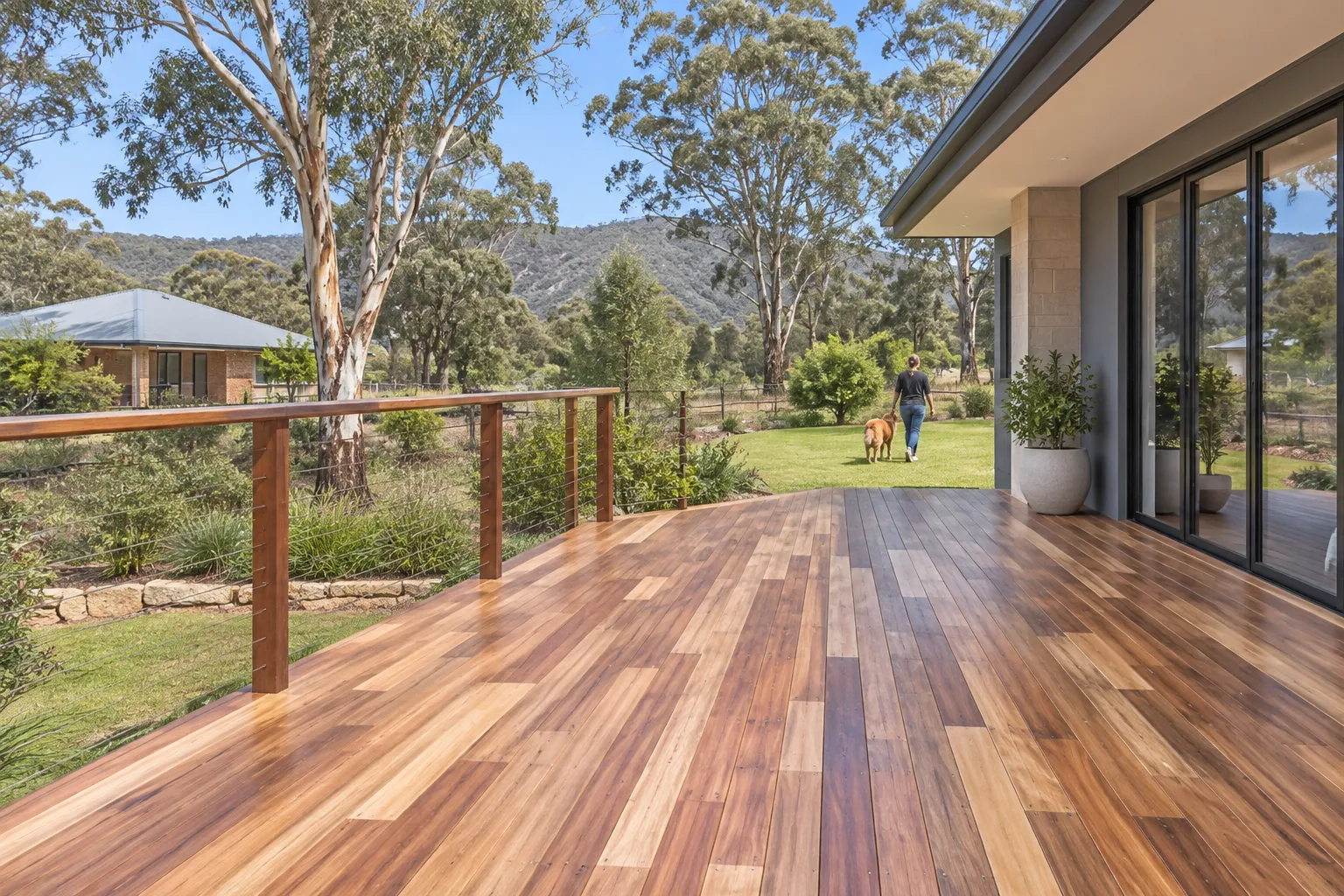
The most common spotted gum decking problems are big colour differences between boards, surface checking (fine cracks), cupping, gum veins, end splitting and greying. Almost all of them come from how the deck is built and looked after rather than the timber itself, which Business Queensland rates class 1 above ground with a life expectancy of more than 40 years. Good board selection, the right gaps and airflow, pre-drilling, and regular oiling prevent most of them. For spotted gum costs and sizes, see our main spotted gum decking page.
Why do spotted gum boards vary so much in colour?
Spotted gum naturally varies from pale cream and grey-brown to dark chocolate, sometimes within one board. That's the timber, not a defect. Some people love the mixed look, others are surprised by it. Higher grades can be more consistent, and laying boards with a mix of tones spread evenly avoids patches. A tinted oil can even it out.
Why does spotted gum crack on the surface?
Fine surface cracks, called checking, happen when the surface dries faster than the inside, especially in strong sun. Albury's hot, dry summers make it common on unoiled or neglected decks. Checks are usually shallow and don't weaken the board. Regular oiling slows them, and a light sand and re-oil smooths the surface again.
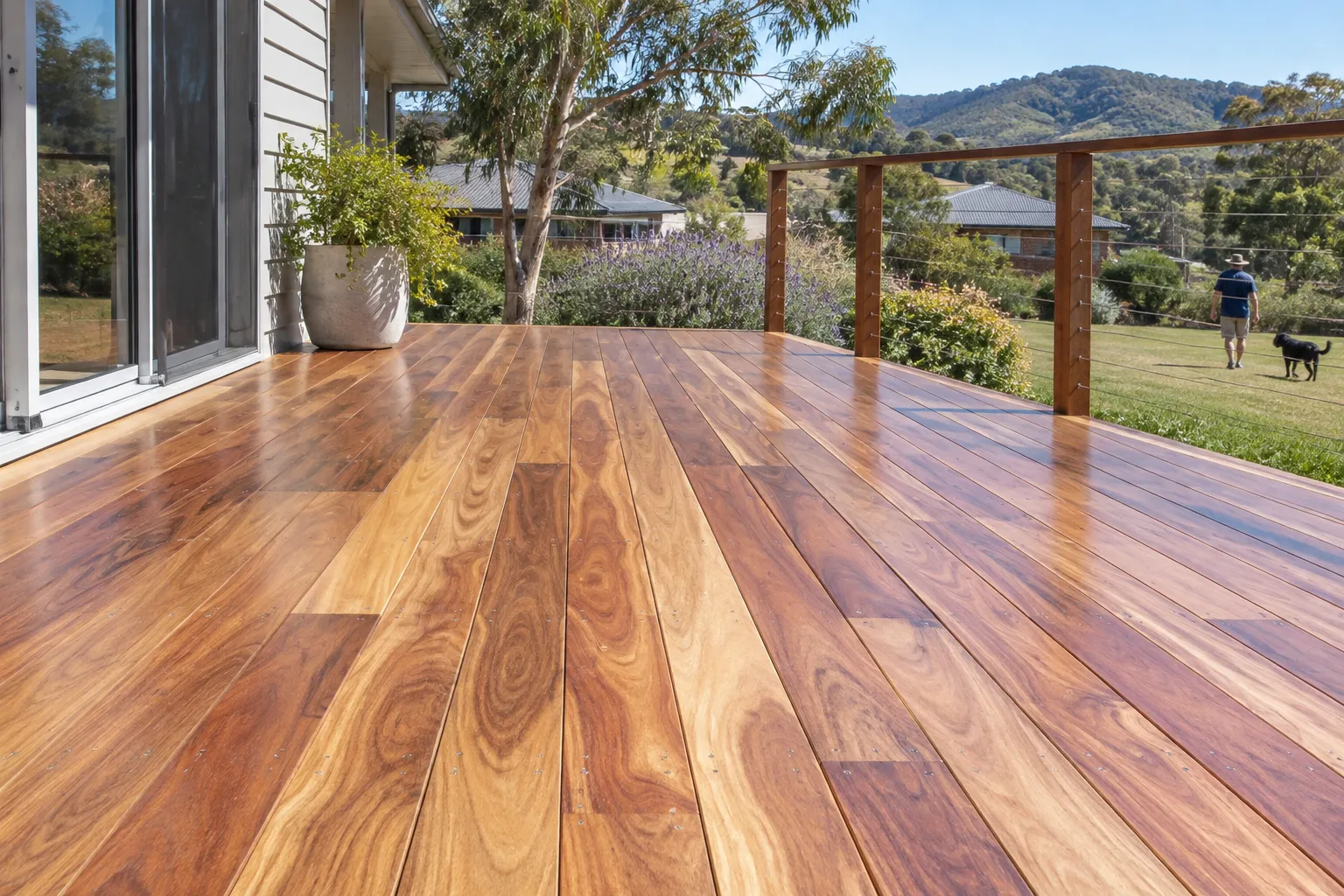
Ways to reduce checking:
- Oil it soon after it's weathered, then every 12 to 24 months.
- Shade west-facing decks with a pergola or patio roof.
- Don't leave a new deck bare through its first summer.
Why are my spotted gum boards cupping?
Cupping, when board edges lift higher than the middle, usually happens because the underside stays wetter than the top. Low decks with poor airflow, boards laid too tight, and damp ground underneath are the usual causes. Wider boards cup more than narrow ones. Fixing the airflow and drainage often lets mild cupping settle as boards dry evenly.
| Problem | Usual cause | Prevention |
|---|---|---|
| Cupping | Wet underside, poor airflow | Open or vented sides, good clearance |
| Boards closing up | Laid too tight | Correct gaps for moisture content |
| Wide gaps | Laid wet, then shrank | Acclimatise boards before laying |
What are gum veins in spotted gum?
Gum veins are natural dark lines of resin in the timber, common in spotted gum and other eucalypts. They're a natural feature, more common in standard and feature grades than in select grade. They don't usually affect strength, but they can occasionally weep a little resin in heat. If you prefer a cleaner look, ask for a higher grade.
Why is my spotted gum deck splitting at the ends?
End splits happen when screws go in too close to the board end without pre-drilling, or when board ends dry out much faster than the rest. Spotted gum is very hard, so it splits easily if it isn't pre-drilled. Sealing the cut ends and keeping fixings a sensible distance from the end prevents most splits. Split ends can often be trimmed and refixed.
Why has my spotted gum deck gone grey?
Spotted gum, like any timber, weathers to silver grey when left in sun and rain without oil. It's a surface change only, and the timber's durability isn't affected. Some owners like the grey look. To bring the colour back, clean the deck with a timber reviver, sand if rough, and oil it. See deck oiling.
Can spotted gum rot?
Spotted gum heartwood is rated class 1 above ground and class 2 in the ground, so it resists rot well above ground. Rot happens where it stays wet for long periods, such as in contact with soil, under pooled water or with no airflow, and in pale sapwood, which is much less durable. The frame underneath is usually more at risk than the boards.
For frame care, see how long a deck frame lasts.
How do you prevent spotted gum problems from the start?
Choose the right grade for the look you want, acclimatise boards on site before laying, leave correct gaps, pre-drill every fixing, seal cut ends, use stainless or galvanised screws, give the deck good airflow, and oil it after it's weathered and regularly after that. A builder who works with hardwood often will do all of this as standard.
For board choices, see spotted gum decking sizes.
Questions people ask
How long does hardwood decking last?
A well-built hardwood deck in a durable species like spotted gum can last decades above ground. Business Queensland gives spotted gum heartwood a class 1 above-ground rating with a life expectancy of more than 40 years. In practice, the frame, footings and fixings, and how well the deck is oiled, decide how long it really lasts.
Is spotted gum prone to splitting?
Spotted gum is very hard, so it can split if screws are driven without pre-drilling, especially near the board ends. Fast drying in hot sun can also open end checks. Pre-drilling, keeping fixings back from the ends, sealing cut ends and regular oiling prevent most splitting.
Does spotted gum need to be acclimatised?
It helps. Stacking boards on site, off the ground with spacers and under cover, for a short time before laying lets them adjust to local conditions. That reduces gaps opening or closing after the deck is built. The builder judges how long, depending on the boards' moisture and the weather.
Can you fix a cupped spotted gum deck?
Often. First fix the cause, usually poor airflow or damp underneath, by opening up the sides or improving drainage. Mild cupping can settle as the boards dry evenly. Badly cupped boards can be sanded flat once dry, or replaced. A builder can check the frame and clearance while they're there.
For the wider picture, start with Border Outdoor Living deck builder.
Where these facts come from
Updated